


I. Production Technology
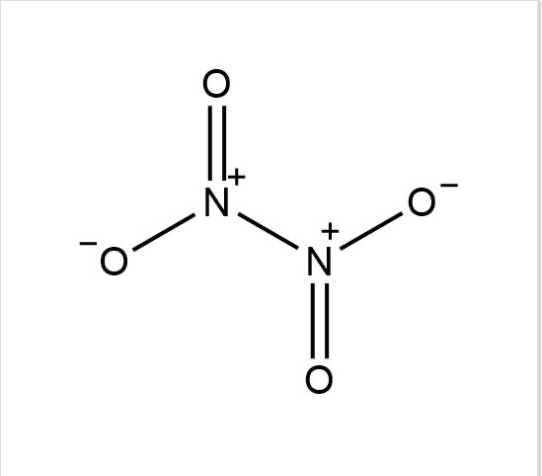
The production process for dinitrogen tetroxide (N₂O₄) is relatively straightforward, with the core lying in the preparation and purification of nitrogen dioxide (NO₂) and the control of the dimerization equilibrium.
Primary Production Routes:
Catalytic Oxidation of Ammonia (The most mainstream, large-scale industrial method)
Core Reactions:
Step 1 (Ammonia Oxidation): 4NH₃ + 5O₂ → 4NO + 6H₂O (over a platinum-rhodium alloy gauze catalyst, at approximately 800-900°C)
Step 2 (Oxidation): 2NO + O₂ → 2NO₂ (an exothermic reaction where temperature control is critical)
Step 3 (Dimerization): 2NO₂ ⇌ N₂O₄ (an exothermic reaction; low temperature favors N₂O₄ formation)
Process Flow:
Purified air is mixed with ammonia and passed through a catalytic oxidation converter to produce NO.
The hot gas is cooled in a waste heat boiler for heat recovery.
NO is thoroughly oxidized with additional air in an oxidation tower to form NO₂.
The gas stream containing NO₂ enters an absorption-distillation system. Under low temperature and pressure, NO₂ dimerizes to N₂O₄, which is condensed and collected, or absorbed by concentrated nitric acid and later regenerated.
Final purification via distillation yields high-purity dinitrogen tetroxide.
Thermal Decomposition of Nitrates
Principle: Heating nitrates (e.g., lead nitrate, sodium nitrate) or nitric acid decomposes them to produce NO₂, which is then condensed and dimerized.
Example: 2Pb(NO₃)₂ → 2PbO + 4NO₂↑ + O₂↑
Characteristics: Suitable for laboratory or small-scale preparation; simple operation but high cost, significant pollution, and not suitable for large-scale industrial application.
Reaction of Metals with Concentrated Nitric Acid
Principle: Metals like copper react directly with concentrated nitric acid to produce NO₂.
Example: Cu + 4HNO₃(conc.) → Cu(NO₃)₂ + 2NO₂↑ + 2H₂O
Characteristics: A classic laboratory preparation method; low yield, used for teaching demonstrations or small-scale requirements.
Key Technical Points:
Equilibrium Control: The production process requires precise control of temperature and pressure to shift the 2NO₂ ⇌ N₂O₄ equilibrium towards N₂O₄ formation (favored by low temperature and high pressure).
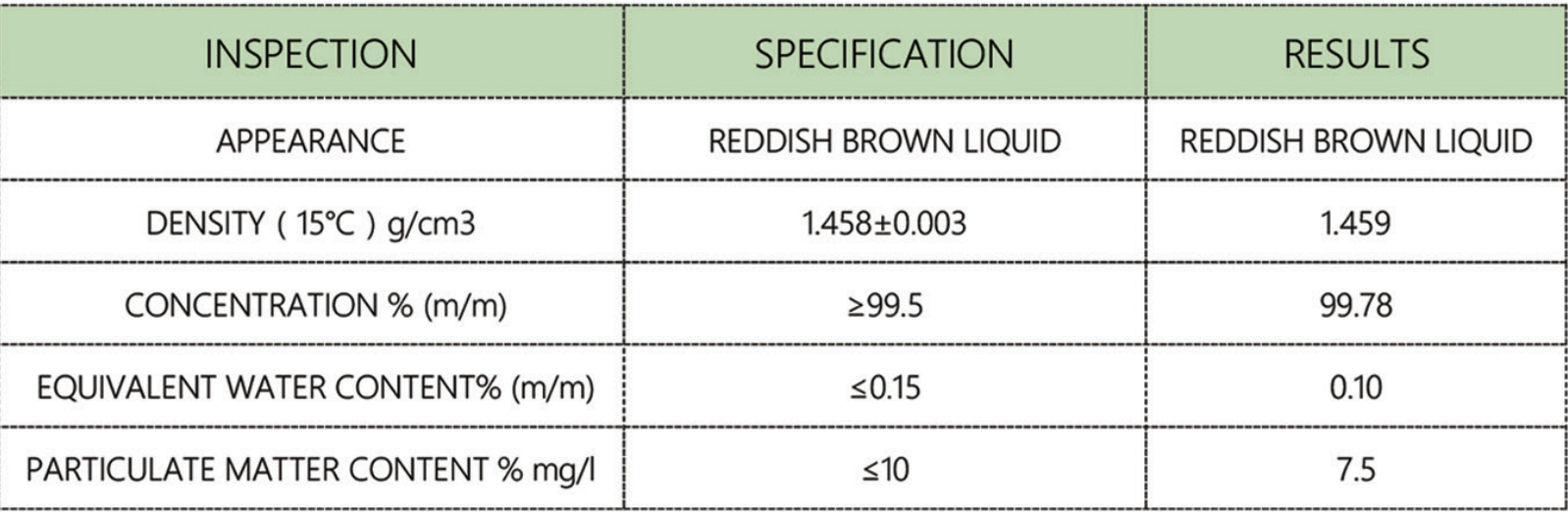
Purification: High-purity N₂O₄ (e.g., aerospace grade >99.5%) is obtained through deep cooling and multi-stage distillation to remove impurities such as water, nitric acid, and unreacted NO.
Material Compatibility: Production equipment must use materials resistant to strong oxidation by N₂O₄ and corrosion by nitric acid, such as stainless steel, aluminum, or Teflon.
II. Core Characteristics
The physical and chemical properties of dinitrogen tetroxide determine its unique applications and high-risk nature.
A. Physicochemical Properties
Reversible Dimer: This is its most distinctive feature. At ambient conditions, it coexists with nitrogen dioxide (NO₂) in an equilibrium: 2NO₂ (red-brown gas) ⇌ N₂O₄ (colorless liquid/gas). Increasing temperature or decreasing pressure shifts the equilibrium to the left, intensifying the color (red-brown); the opposite conditions lighten the color or make it colorless.
Strong Oxidizer: N₂O₄ itself is a strong oxidizing agent and can react vigorously with many metals, non-metals, and organic compounds.
Reaction with Water: It reacts with water to form nitric acid and nitrous acid, giving it strong corrosive properties.
N₂O₄ + H₂O → HNO₃ + HNO₂
Cryogenic Liquid: Pure N₂O₄ has a boiling point of 21.15°C and a freezing point of -11.23°C. It liquefies easily under pressure at room temperature, facilitating storage and transport.
B. Application Characteristics
Liquid Rocket Propellant (Primary Use):
Oxidizer: Used with hydrazine-based fuels (e.g., Unsymmetrical Dimethylhydrazine, UDMH) to form hypergolic bipropellant systems (ignite on contact), offering high reliability. Widely used in satellites, spacecraft, and missiles (e.g., China''s Long March series, US Titan rockets).
Advantages: Storable as a liquid at ambient temperatures ("storable propellant"), stable performance, simple and reliable ignition.
Disadvantages: Highly toxic, strongly corrosive, environmentally polluting combustion products (gradually being replaced by more environmentally friendly propellants like liquid oxygen/kerosene).
Nitrating Agent & Chemical Feedstock:
Used in organic synthesis as a mild nitrating agent to introduce nitro groups (-NO₂).
Used in the production of specialty explosives, dyes, pesticide intermediates, etc.
Laboratory Reagent: Used as a strong oxidizing and nitrating agent in analytical chemistry and synthetic research.
C. Safety and Toxicity Characteristics (High Risk)
Highly Toxic: Vapors are highly toxic, primarily damaging the respiratory tract and lungs, causing pulmonary edema; high concentrations can be fatal.
Strong Corrosiveness: Reacts with water to form strong acids, causing severe corrosion to skin, eyes, mucous membranes, and equipment.
Strong Oxidizer Hazard: Contact with reducing agents (e.g., fuels, organic materials, metal powders) can cause intense fire or explosion.
Pressure Hazard: Heating or vaporization due to leakage can cause a rapid pressure increase in containers, posing a risk of physical explosion.
Environmental Hazard: Leaks cause air pollution and soil acidification.
Primary Applications in the Following Fields:
Aerospace and Military (Core Application): Serves as the primary oxidizer in liquid rocket propellants, forming a hypergolic bipropellant system when combined with hydrazine-based fuels.
Specialty Chemicals and Materials Synthesis: Functions as a nitrating agent and oxidizer in the production of specialized energetic materials, dye intermediates, pharmaceutical intermediates, and for material surface modification.
Research and Education: Utilized as a reagent in analytical chemistry, synthetic reactions, and as a material for demonstrating physicochemical principles in laboratory settings.