


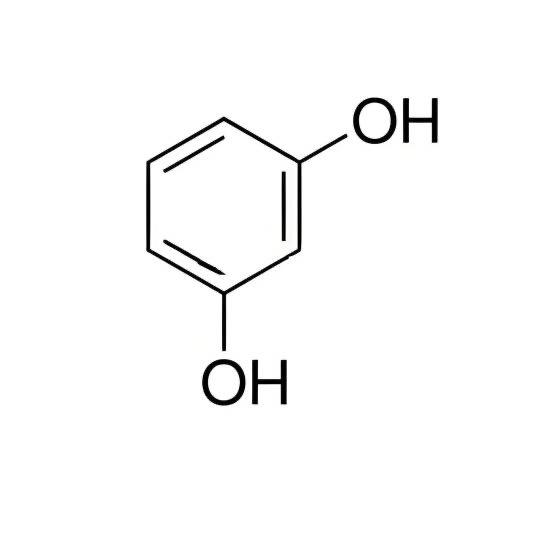

Resorcinol is an important fine chemical intermediate with unique chemical properties.
Its wide range of applications stems from its distinctive molecular structure, where two hydroxyl groups are positioned at the meta positions on the benzene ring.
High Reactivity
Easy Substitution on the Benzene Ring: Due to the strong electron-withdrawing and directing effects of the two hydroxyl groups, other positions on the benzene ring (particularly the 4- and 6-positions) are highly susceptible to electrophilic substitution reactions, such as sulfonation, nitration, halogenation, and coupling. This makes it a key intermediate in the production of dyes and pharmaceuticals.
Reactive Hydroxyl Groups: The two phenolic hydroxyl groups can participate in reactions such as etherification and esterification.
Strong Reducing Ability
As a dihydric phenol, resorcinol exhibits significant reducing capacity and can be used as an antioxidant or reducing agent. For example, it is employed in chemical analyses to detect sugars (e.g., in the Seliwanoff test).
Coordination and Complexation Ability
It can form colored complexes with various metal ions (e.g., iron, aluminum, copper). This property was historically utilized in analytical chemistry but also causes its aqueous solution to discolor when in contact with iron vessels.
Strong Ultraviolet Absorption
It effectively absorbs ultraviolet light, making it a suitable raw material for synthesizing ultraviolet absorbers used in plastics and coatings to prevent photoaging.
Key Application Technology Areas
Rubber Industry Technology (Largest-volume Use)
Core Technology: Resorcinol-formaldehyde-silica (RFS or HRH) bonding system.
Mechanism of Action: Resorcinol pre-condenses with formaldehyde to form a resin. During the vulcanization process, this resin forms strong chemical bonds and a physical adsorption network with the silica (white carbon black) in the rubber and the rubber molecules themselves.
Technical Effect: It revolutionarily enhances the bond strength and durability between reinforcing materials (steel cords, polyester, nylon cords, aramid) and rubber, especially the rubber used in radial tires. This technology is indispensable for high-performance tires (e.g., green tires, giant off-the-road tires).
Wood Adhesive Technology
It reacts with formaldehyde to produce resorcinol-formaldehyde resin.
Characteristics: Rapid curing at ambient temperature, excellent water resistance, weatherability, and extremely high bonding strength.
Applications: Used in manufacturing high-grade outdoor laminated wood structural beams (e.g., glulam for construction), ships, sports equipment, and other fields requiring extreme durability.
Pharmaceutical and Personal Care Product Technology (Historical and Restricted Use)
Pharmacological Action: Bactericidal, anti-pruritic, and keratolytic (promotes shedding of aged outer skin cells).
Historical Applications: Previously used to treat skin conditions like acne, psoriasis, and eczema, and as an ingredient in chemical peels and hair dyes.
Current Restrictions: Due to its skin irritancy, sensitizing potential, and inherent toxicity (it can be absorbed through the skin, affecting the thyroid and central nervous system), its use in leave-on cosmetics (e.g., face creams) is strictly banned or heavily restricted in many regions and countries, including the EU and China. In pharmaceuticals, it is also tending to be replaced by safer alternatives.
Dye and Fluorescent Agent Synthesis Technology
It serves as a key intermediate for synthesizing various azo dyes, fluorescent whitening agents, and laser dyes.