


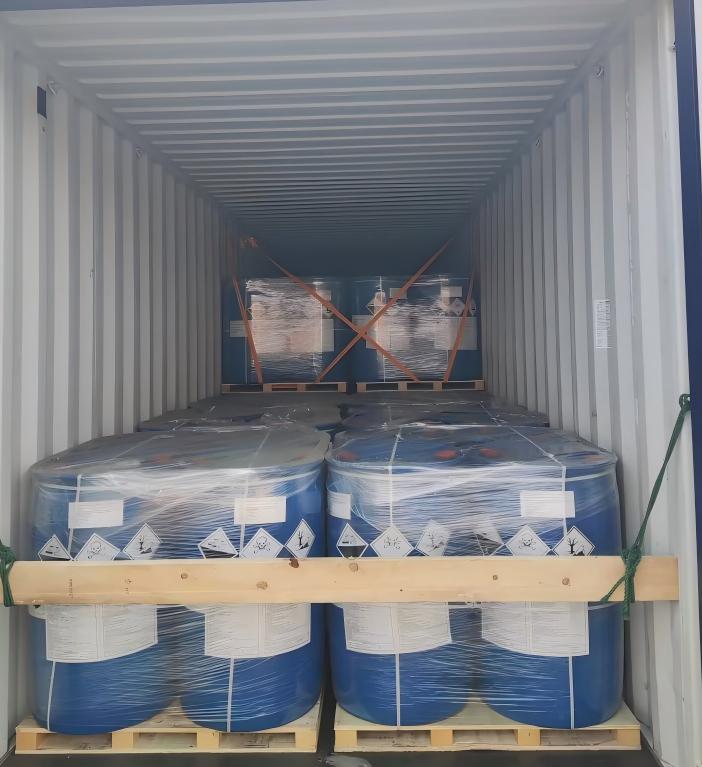

Chemical Properties: Hydrazine hydrate 80% possesses strong reducing properties and can react vigorously with oxidizers such as halogens, nitric acid, and potassium permanganate. It can absorb carbon dioxide from the air, producing smoke. At high temperatures, it easily decomposes to form nitrogen, ammonia, and hydrogen. It is strongly alkaline, hygroscopic, and can corrode materials such as glass, rubber, and leather.
Physical Properties: Appearance is a colorless, transparent liquid with a faint, characteristic ammonia-like odor, emitting smoke in humid air. Melting point is approximately -51.7°C, boiling point is approximately 118-119°C, density is about 1.027 g/cm³, and refractive index is about 1.4284. It is miscible with water and ethanol but insoluble in diethyl ether and chloroform.
Stability and Safety: It is relatively stable at room temperature but may burn or explode when exposed to open flames or high heat. It is highly toxic, with an LD50 (rabbit, intravenous) of 25 mg/kg, and poses long-term carcinogenic risks upon exposure. Operational precautions include wearing protective gear such as a gas mask, chemical safety goggles, and anti-corrosion gloves.
Application Characteristics:
Due to its strong reducing and alkaline properties, hydrazine hydrate is widely used as a reducing agent and synthetic intermediate across various industries, including water treatment (effluents, industrial boilers), chemical treatment process (metals, mineextraction) or active ingredients synthesis(pharmaceuticals and agrochemicals). It is applied in pharmaceutical synthesis (e.g., anti-tuberculosis drugs), blowing agent production, rocket fuel formulations, and metal purification in the electronics industry, and also serves as a raw material for preparing intermediates such as triazole compounds in organic synthesis. Additionally, it acts as a desoxidant for boiler descaling and is an upstream raw material for methylhydrazine and many other hydrazine or pyrazole derivatives.
Storage Requirements: Must be stored in a sealed container to avoid contact with air, preventing decomposition or absorption of carbon dioxide. The storage area should be cool, well-ventilated, and kept away from oxidizers and ignition sources.
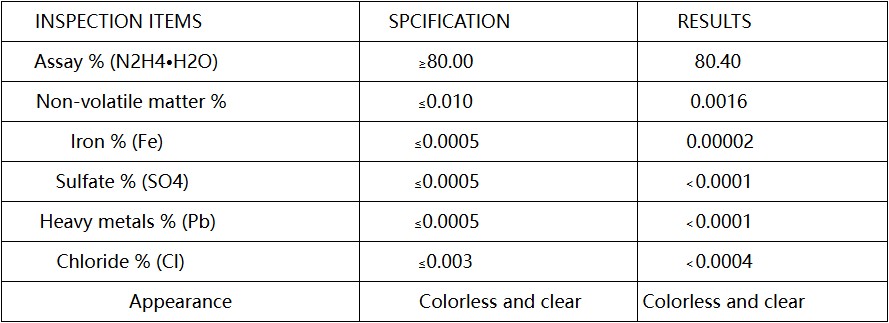
|
|---|