

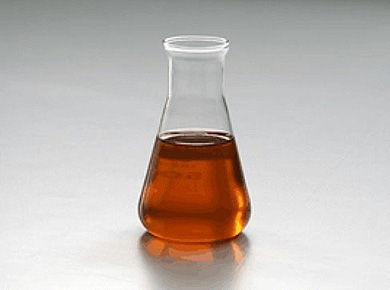

As an auxiliary antiknock agent of tetraethyl lead, the antiknock agent can effectively improve the octane number of gasoline, especially gasoline with high paraffin hydrocarbon composition.
MMT decomposes under the high temperatures in the engine combustion chamber, generating fine manganese oxide particles (e.g., Mn₃O₄). These nanoparticles act as free radical scavengers, suppressing the chain reactions that cause engine knocking, thereby providing anti-knock effects.
Safety and Storage (MMT itself)
Highly Toxic: MMT can cause poisoning through skin absorption, inhalation, or ingestion, leading to damage to the nervous system, liver, and kidneys.
Flammable: Both the liquid and its vapor are flammable.
Environmental Hazard: Highly toxic to aquatic life with long-lasting effects.
Storage and Handling: Must be handled in a closed system with adequate ventilation while wearing full protective gear (including specialized chemical-resistant gloves and a respirator). Store in a cool, well-ventilated, fire-resistant area, away from incompatible materials.
|
Analysis Item |
Standard |
Measured value |
Test Method |
|
Appearance |
Claybank color liquid |
Claybank color liquid |
Visual |
|
Manganese content(20℃) |
≥15.1(%) |
15.4(%) |
AAM 5271 |
|
Density(20℃) |
1.1±0.1 |
1.146 |
ASTM D4052 |
|
Freezing point(initial) |
≤-20℃ |
-25℃ |
ASTM D2386 |
|
Flash point |
≥42℃ |
58℃ |
ASTM D 93 |
|
Solubility |
Gasoline: mixable |
Gasoline: mixable |
Visual |
It is an automotive fuel additive used by refineries to improve fuel quality and reduce costs. Buying a ton of crude oil can easily produce more gasoline of No.90/93/97
Currently, its applications are primarily confined to laboratory research or specialized industrial scenarios, and strict adherence to safety regulations is essential. Future development trends will continue to favor cleaner, more sustainable fuel additive technologies.