


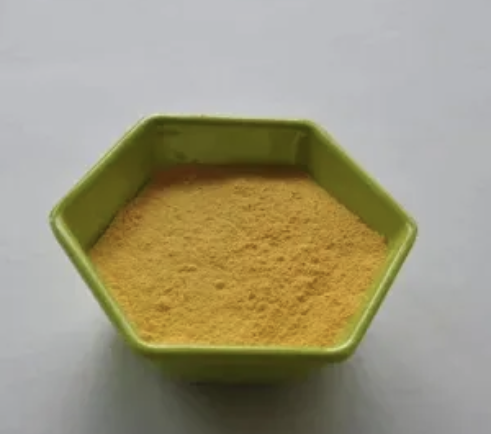

It is a commonly used industrial foaming agent, utilized in the production of yoga mats, rubber soles, and other products to enhance elasticity. It is also employed in the food industry to increase the strength and flexibility of dough. The agent is widely applied in polyethylene (PE), polyvinyl chloride (PVC), polypropylene (PP), ABS resin, and rubber foams.
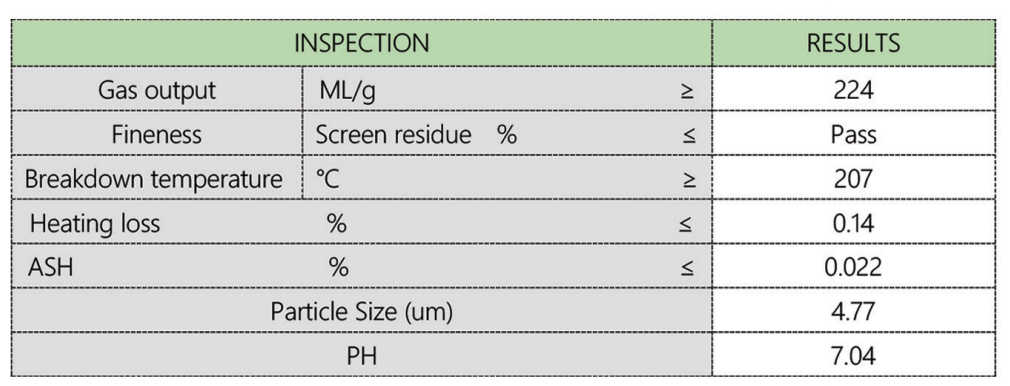
High Gas Yield: It has a high gas yield (typically ≥215 mL/g), making it a high-performance and widely used foaming agent.
Stable Performance: It is stable during storage at room temperature, non-toxic, odorless, non-flammable, does not stain the finished product, and is non-corrosive to molds.
Adjustable Decomposition Temperature: The pure product has a relatively high decomposition temperature (approximately 205-215°C). However, by adding activators (such as zinc oxide, stearates, etc.), the decomposition temperature can be lowered to 150°C or even lower to meet the processing requirements of different materials.
Good Dispersibility: It produces fine and uniform cells, resulting in products with a good hand feel and attractive appearance.
Wide Applicability: It is suitable for both atmospheric pressure foaming and pressure foaming processes.
Main Applications:
AC Foaming Agent is widely used in the foaming processes of various synthetic materials. Specific applications include:
Application Field Specific Products/Materials
Footwear Materials: Slippers, shoe soles, insoles
Plastic Products: Plastic wallpapers, ceiling tiles, floor coverings, artificial leather
Building Materials: Thermal insulation materials, soundproofing materials
Applicable Materials: Polyvinyl Chloride (PVC), Polyethylene (PE), Polypropylene (PP), Polystyrene (PS), ABS, Ethylene-Vinyl Acetate Copolymer (EVA), and various rubbers